
Every shop gets its own face.

I design and build websites, counter systems and apps for independent places: bookshops, bars, podcasts, even a household ledger. Each one starts from a blank page and is built around how that place actually runs.

Start a projectSee the work

Each sign is set in that project’s own typefaces and colors.

The work

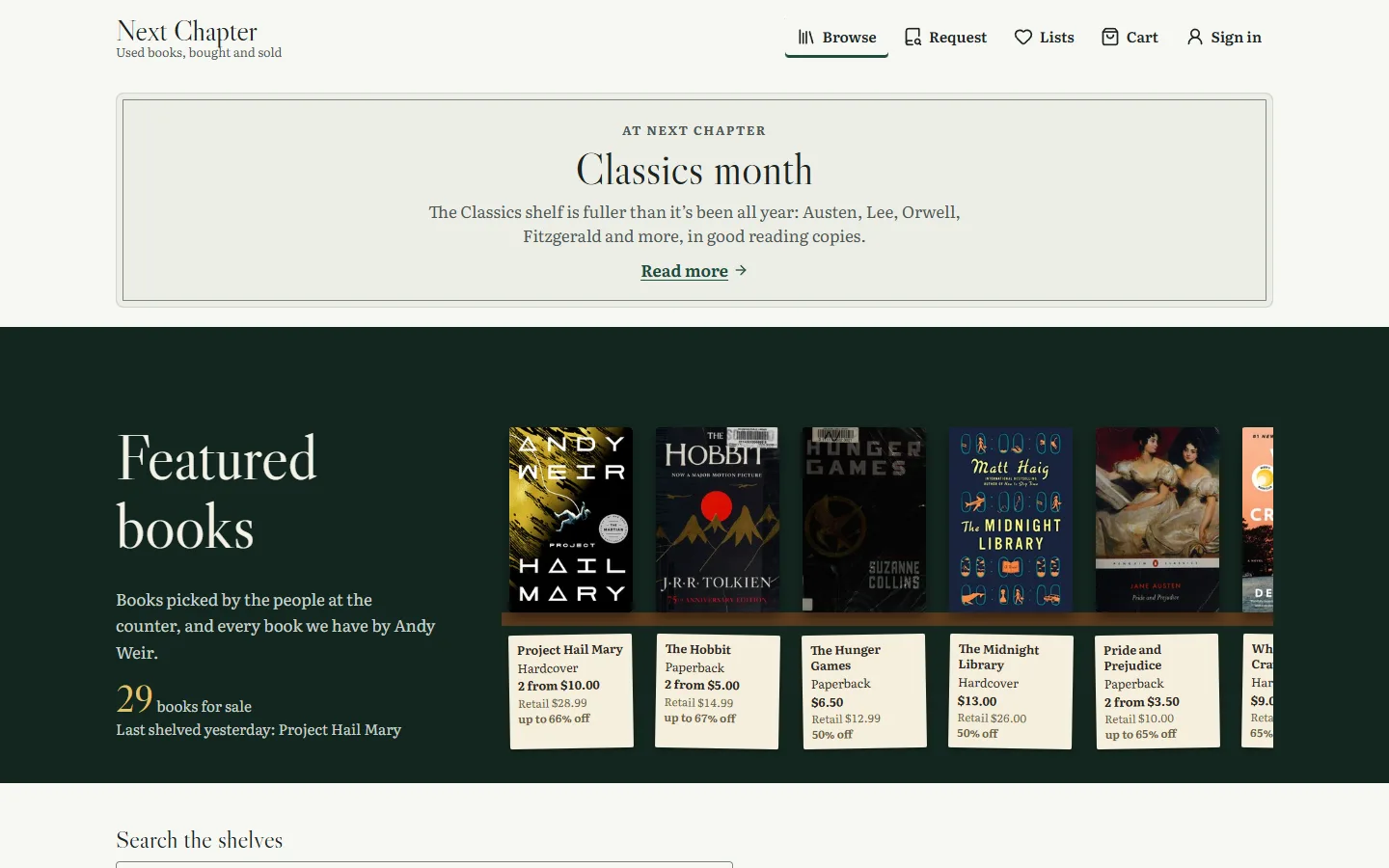
Next Chapter Book Store

A used bookshop, opening soon

A website and a shop counter that share one live inventory, plus a register of its own for the bar. Shelve a book at the till and it’s on the website a moment later. If someone has been waiting for that book, the copy is set aside for whoever asked first, and they’re told at the same moment.

Made
Website, point of sale, and a separate bar register
Type
Libre Caslon Display and Literata
Color
Endpaper, Ink, Buckram green, Oxblood, Gilt
Status
Working demo, ready for opening day
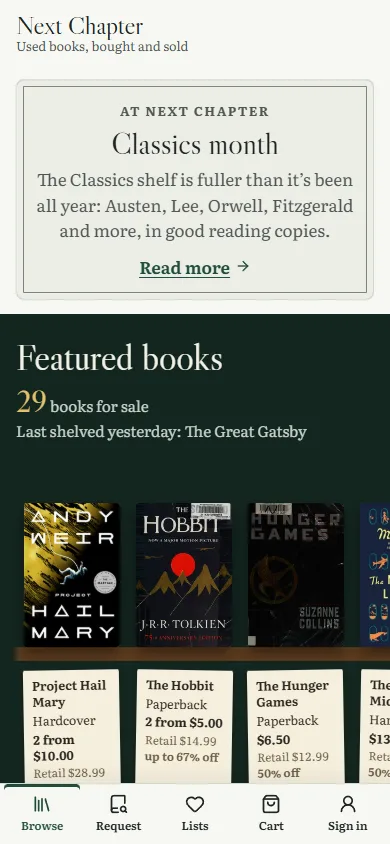
Next Chapter Book Store on a desktop Next Chapter Book Store on a phone

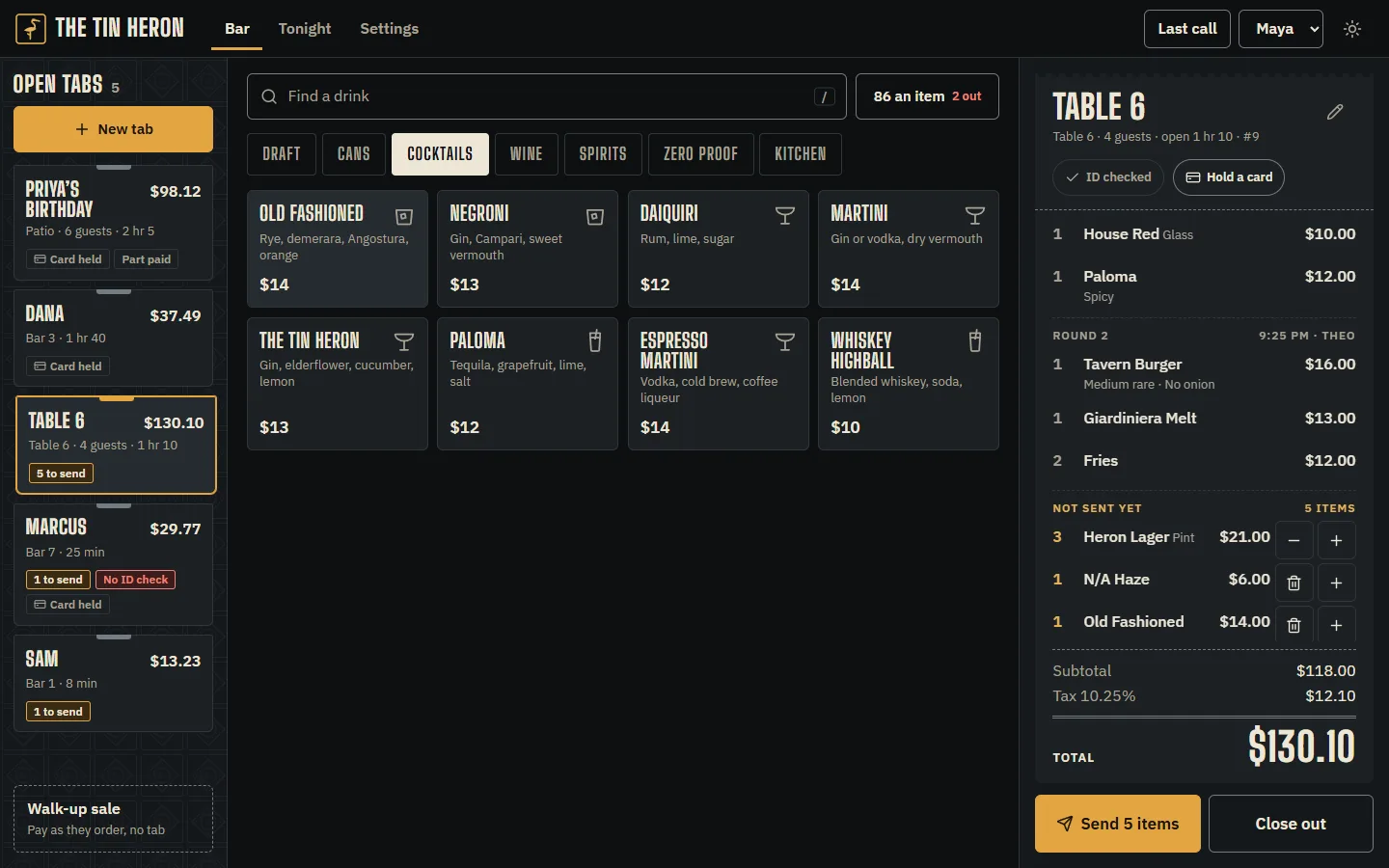
The Tin Heron

An example. The tavern is made up.

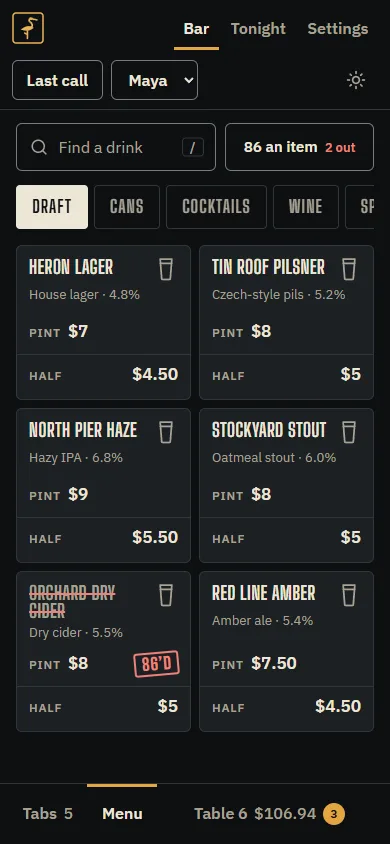
A bar register built to show what a custom one can be. Tabs sit on a rail, drinks ring in by pour size, rounds go to the bar and the kitchen, and checks split however the table wants. It runs dark during service so it doesn’t glare across the room.

Made
Bar register, Windows app, tablet and handheld app
Type
Big Shoulders Display and IBM Plex Sans
Color
Back-bar black, Bone, Brass, Cherry
Status
Example project, installable today
The Tin Heron on a desktop The Tin Heron on a phone

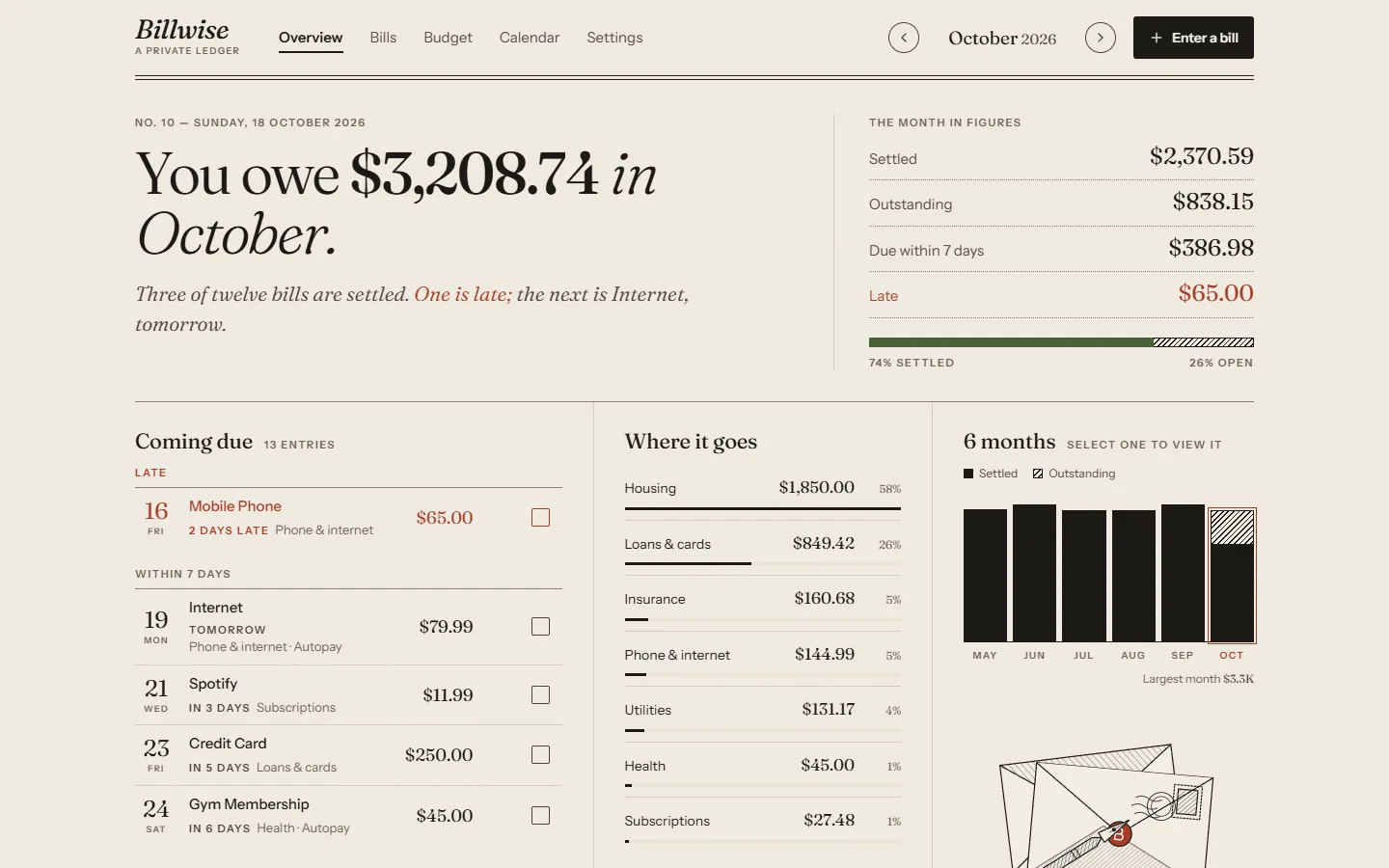
Billwise

My own app

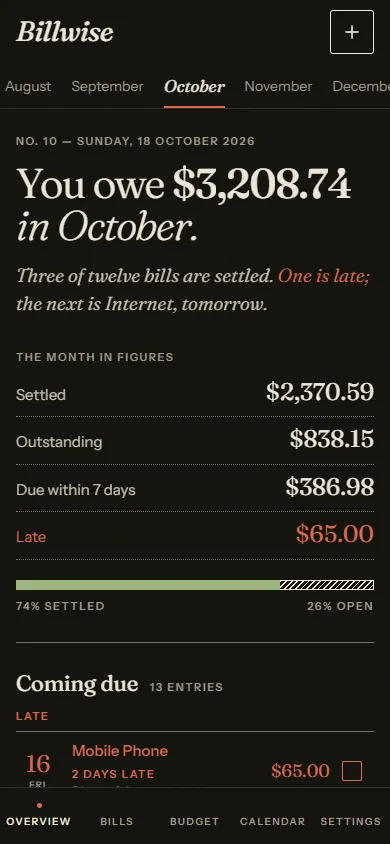
A private ledger for household bills, with a budget built on top. Enter each bill once and it tells you what you owe this month, what’s due next and what’s settled. Add your paychecks and it shows what’s left. It installs on a phone or computer straight from the site, works offline, and nothing leaves the browser.

Made
Website and installable app
Type
Fraunces and Instrument Sans
Color
Paper, Ink, Vermilion, Olive
Status
Live
Billwise on a desktop Billwise on a phone

Eight checks before anything ships

Every project is held to the same eight points before it goes out. Each one comes with an example from the work above.

  • A point of view, not a template

    Next Chapter’s home page is a bookshop wall: staff picks face-out on a dark shelf, each with a paper price tag.

  • Typography that does work

    Every project gets its own pair of typefaces, and none of them is Inter or Roboto. The Tin Heron’s Big Shoulders was drawn from Chicago signage, for a Chicago bar.

  • A restrained color system

    Billwise uses four colors: paper, ink, vermilion for anything late and olive for anything settled. Categories get no color at all.

  • Hierarchy that breathes

    Billwise opens with one sentence set large: what you owe this month. Everything else on the page explains that number.

  • Imagery with intent

    No stock photos anywhere. Billwise has engraved envelopes drawn in code, the Tin Heron has its own glassware icons, and Next Chapter shows the real covers of the books on its shelves.

  • Motion that whispers

    One moment per project, then quiet: a book drops onto a shelf, a Paid stamp lands on a finished sale, a pen stroke crosses out a settled bill. It all switches off for people who turn motion off.

  • Mobile that’s designed, not shrunk

    On a phone the Tin Heron becomes a handheld with one pane at a time. Next Chapter moves its menu to a bottom tab bar and lets its shelves swipe.

  • The invisible expensive stuff

    Every color pair is checked against WCAG AA by a script: 96 pairs on Next Chapter, 104 on its bar, 52 on the Tin Heron. Every page has a real title, share tags, a skip link and visible keyboard focus.

The eight points come from Metics Media’s $10K Checklist. This page is held to them too: it weighs 67 KB before the pictures arrive.

How a project goes

  1. We talk about how your place runs

    What you sell, who comes in, and what slows you down at the counter. It starts with the project form or a quick message.

  2. You pick from two directions

    I mock up two different designs with your real name, products and photos. You choose one, or mix the parts you like.

  3. I build it and check it

    The full site or system, tried on a desktop, a tablet and a phone, and held to the eight points above.

  4. It goes live, and it’s yours

    It goes up on your own web address, and you get the source code with plain notes on how it works.

Get in touch

Ready to start something? The project form is my new client questionnaire. It takes about 10 minutes, and your answers let me bring real ideas to our first call.

Start a project

I reply within one business day.

Or send a quick message

A question, an idea that isn’t a project yet, or just hello.